Can You Grow a Website on Hostinger?
Can You Grow a Website on Hostinger? Discover how Hostinger supports website growth with fast performance, scalable hosting plans, SEO-friendly features, and affordable pricing for beginners and growing businesses.
If you’ve ever tried to grow a website, you already know this truth: hosting can either fuel your growth or quietly choke it. Think of hosting like the foundation of a house.
You can decorate all you want, but if the foundation is weak, cracks will show sooner or later. So when people ask, “Can you grow a website on Hostinger?” what they’re really asking is whether Hostinger can support traffic increases, handle performance demands, and scale without turning your site into a slow, unreliable mess.
Website growth isn’t just about getting more visitors. It’s about speed, uptime, SEO performance, security, and the ability to expand without rebuilding everything from scratch.
Many beginners start with cheap hosting and later regret it when their site outgrows the server. Others assume affordable hosting can’t possibly support serious growth. That’s where Hostinger often sparks debate.
Hostinger markets itself as budget-friendly, beginner-focused, and fast. But budget-friendly doesn’t always mean limited.
In fact, some of the fastest-growing blogs, affiliate sites, portfolios, and even ecommerce stores quietly run on Hostinger. The real question isn’t can you grow—it’s how far you can grow before needing something bigger.
In this article, we’re going to break everything down, step by step, in plain human language. No fluff. No hosting jargon overload.
Just a real-world look at whether Hostinger can actually support a growing website—from day one to thousands (or even millions) of visitors.
Understanding Hostinger: A Quick Overview
Hostinger didn’t become one of the most popular hosting providers by accident. It started with a simple idea: make web hosting affordable without making it terrible. Over time, that idea evolved into a full ecosystem of hosting solutions designed for different stages of website growth.
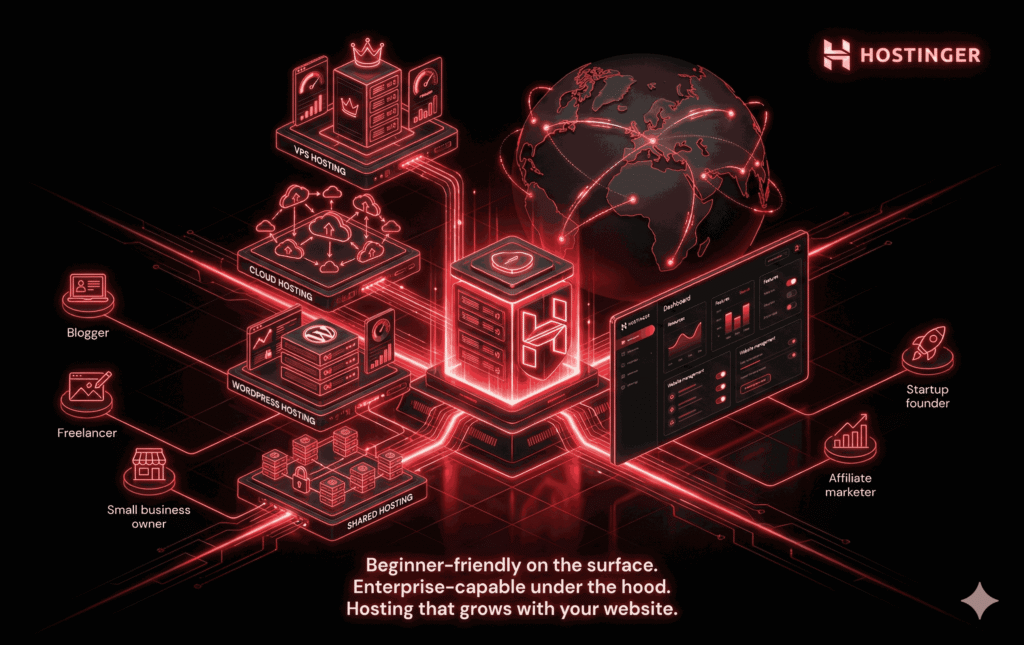
At its core, Hostinger is a global web hosting company offering shared hosting, WordPress hosting, cloud hosting, and VPS hosting.
It operates data centers across multiple continents, which is a big deal for performance and global reach. Instead of relying on a single location, Hostinger allows users to choose server locations closer to their target audience. That alone can shave seconds off load times.
What makes Hostinger stand out is its custom control panel, called hPanel. Unlike cPanel, which can feel bloated and confusing, hPanel is cleaner, simpler, and more beginner-friendly. That matters when you’re trying to grow a site and don’t want to waste hours figuring out technical settings.
Hostinger is best suited for:
Beginners launching their first site.
Bloggers and content creators.
Small businesses.
Freelancers.
Affiliate marketers.
Startups testing ideas.
But here’s the interesting part: Hostinger doesn’t force you to stay small. As your site grows, you can move from shared hosting to cloud or VPS without switching providers. That’s a big win for long-term growth.
So while Hostinger looks beginner-focused on the surface, under the hood, it has the tools needed to support much bigger ambitions.
Hostinger Product Description (Quick Overview)
| Feature | Description |
|---|---|
| Hosting Provider | Hostinger |
| Best For | First-time website owners, beginners, bloggers, freelancers, and small businesses |
| Hosting Types | Shared Hosting, WordPress Hosting, Cloud Hosting, VPS Hosting |
| Starting Price | Budget-friendly introductory pricing (varies by region & offers) |
| Control Panel | Custom hPanel (Beginner-friendly & easy to navigate) |
| Website Builder | Built-in drag-and-drop Website Builder included |
| WordPress Support | 1-click WordPress install, auto updates, WP optimization |
| Performance | Fast loading speeds with SSD storage & built-in caching |
| Uptime Guarantee | 99.9% uptime commitment |
| Free Domain | Yes (on selected annual & multi-year plans) |
| Free SSL Certificate | Included on all major plans |
| Email Hosting | Free professional email accounts are available |
| Backups | Weekly or daily backups (depends on plan) |
| Security Features | SSL, malware protection, firewall, DDoS protection |
| Customer Support | 24/7 Live Chat Support |
| Data Centers | Multiple global locations (US, Europe, Asia) |
| Migration | Free website migration available |
| Money-Back Guarantee | 30-day refund policy |
| Affiliate Program | Up to ~40% commission per sale |
| Ease of Use Rating |  (5/5 – excellent for beginners) (5/5 – excellent for beginners) |
| Overall Rating | ☆ (4.5 / 5) |
What Does “Growing a Website” Really Mean?
Before we judge whether Hostinger can support growth, we need to define what growth actually looks like. A lot of people think growth just means more visitors, but that’s only one piece of the puzzle.
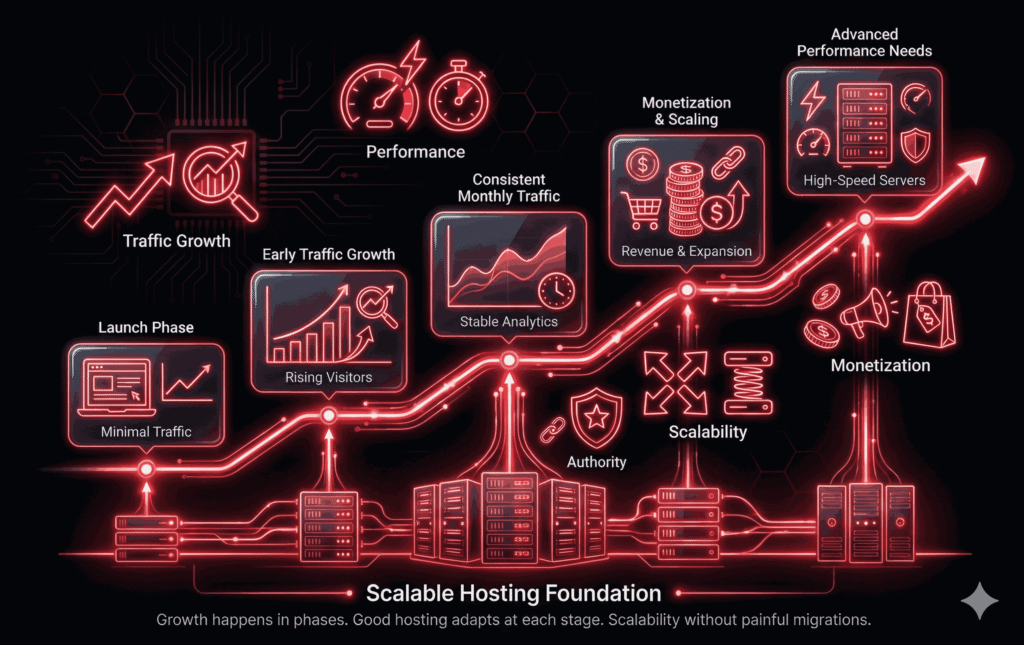
Website growth usually includes:
Traffic growth: More visitors from search engines, social media, ads, and referrals.
Performance demands: Faster load times, smoother user experience, and lower bounce rates.
Scalability: The ability to handle traffic spikes without crashing.
Monetization: Ads, affiliate links, products, services, or subscriptions.
Authority: Building trust, backlinks, and brand recognition.
Now here’s the key point: growth is gradual. Most websites don’t go from zero to a million visitors overnight. They grow in phases.
The hosting that works at 1,000 visitors per month might struggle at 100,000—but that doesn’t mean it’s bad hosting. It just means it’s doing its job at the right stage.
Hostinger is designed to support these growth stages:
Launch phase.
Early traffic growth.
Consistent monthly traffic.
Monetization and scaling.
Advanced performance needs.
If your hosting can adapt across these phases without forcing a painful migration, that’s a strong sign it’s growth-friendly.
Hostinger Hosting Plans Explained
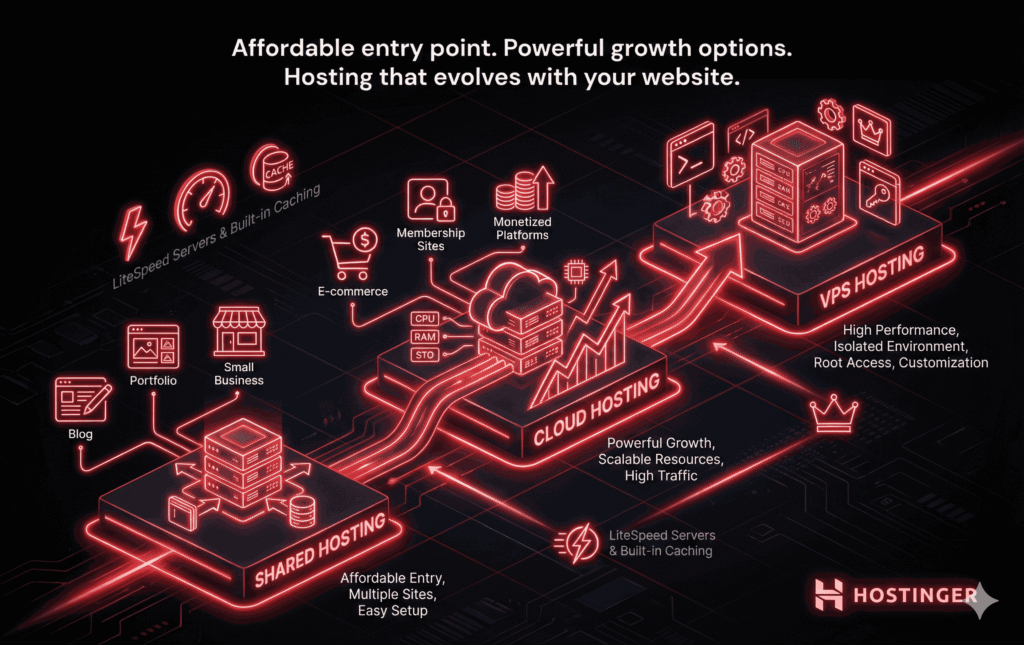
One of the biggest reasons people can grow on Hostinger is its range of hosting plans. You’re not locked into a single type of hosting forever.
Shared Hosting
Shared hosting is where most people start, and honestly, Hostinger’s shared hosting is better than its price suggests. Your site shares server resources with other sites, which keeps costs low. This setup works perfectly for:
New blogs.
Portfolio websites.
Small business sites.
Early-stage affiliate sites.
Hostinger optimizes shared hosting using LiteSpeed servers and built-in caching. That means even on shared hosting, your site can feel fast if it’s properly optimized.
Cloud Hosting
This is where growth really kicks in. Cloud hosting gives you dedicated resources without the complexity of VPS management. If your site starts pulling serious traffic, this is often the sweet spot.
Cloud hosting on Hostinger is ideal for:
High-traffic blogs.
E-commerce stores.
Membership sites.
Monetized content platforms.
VPS Hosting
For advanced users, VPS hosting offers full control, root access, and serious power. It’s not beginner-friendly, but it’s perfect for developers, SaaS projects, and custom setups.
The beauty here is flexibility. You can start small and upgrade only when your site actually needs it.
Is Hostinger Good for Beginners?
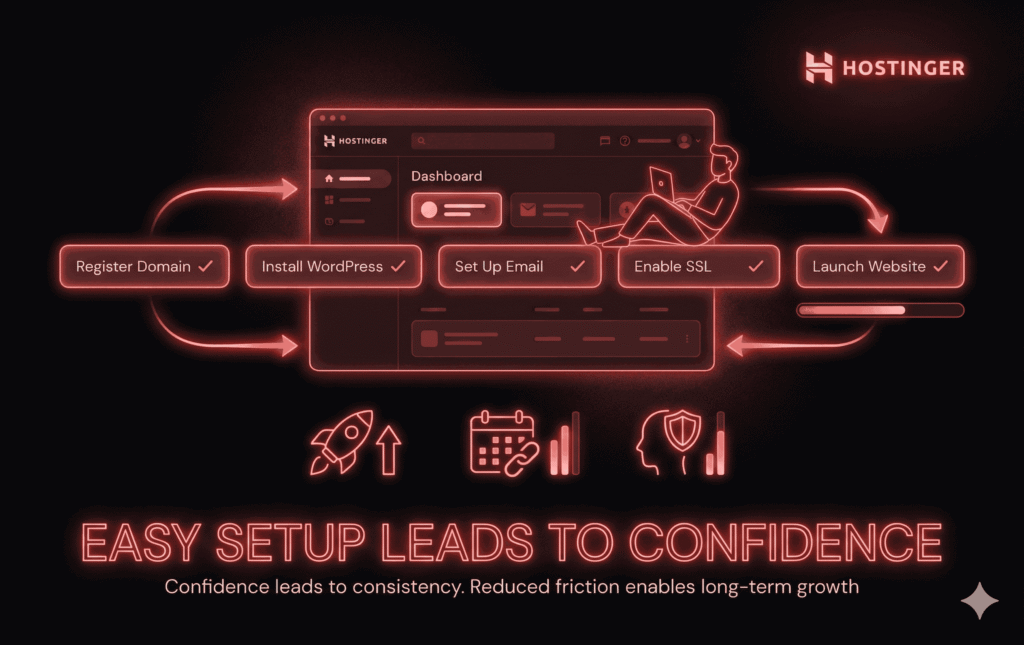
Growth always starts with beginners. And if a hosting platform is confusing or frustrating early on, most people quit before growth even becomes a possibility.
Hostinger shines here.
The onboarding process is smooth. You can:
Register a domain.
Install WordPress.
Set up email.
Enable SSL.
Launch your site.
All in minutes.
The hPanel is designed for humans, not system administrators. Everything is labeled clearly. You don’t feel like you’re defusing a bomb every time you click a setting.
For beginners trying to grow a website, this matters more than people realize. When tasks are easy, you’re more likely to:
Publish content consistently.
Experiment with features.
Fix issues quickly.
Stay motivated.
Growth isn’t just technical—it’s psychological. Hostinger removes a lot of early friction.
Website Speed and Performance on Hostinger
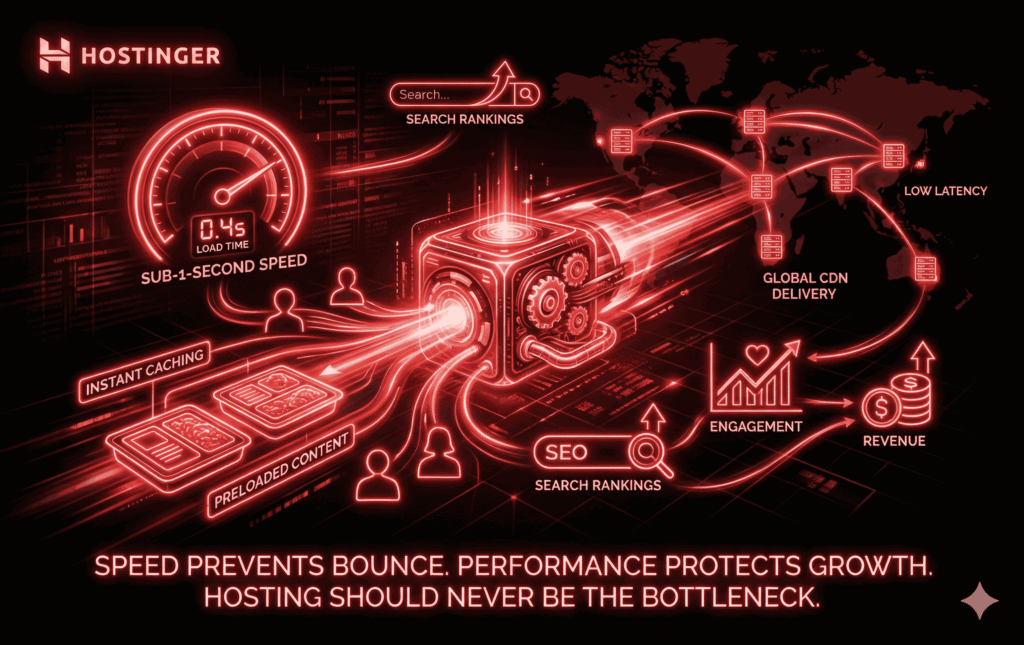
Speed is the silent growth killer. You can have the best content, the smartest SEO strategy, and a beautiful design—but if your site loads slowly, people leave.
Search engines notice. Revenue drops. Growth stalls. So the big question is: can Hostinger keep up as your site gets faster and heavier with content, images, plugins, and traffic?
Hostinger performs surprisingly well in this area, especially considering its pricing. One major reason is its use of LiteSpeed web servers instead of traditional Apache servers.
LiteSpeed is known for handling concurrent users efficiently, meaning multiple visitors can access your site at the same time without causing slowdowns. This is critical when your content starts ranking, and traffic spikes hit unexpectedly.
Another speed booster is built-in caching. Hostinger integrates LiteSpeed Cache for WordPress, which dramatically reduces load times when configured correctly. Pages are served faster, server load decreases, and user experience improves.
Think of it like preparing meals in advance instead of cooking from scratch every time someone walks into your restaurant.
Hostinger also offers free CDN integration (Content Delivery Network) on many plans. A CDN stores copies of your site on servers around the world, delivering content from the closest location to the visitor. If your audience is global, this can be a game-changer.
Real-world performance tests consistently show Hostinger loading times under 1 second for well-optimized sites. That’s more than enough to support SEO growth, ad revenue, and user engagement.
As long as you follow basic optimization practices, Hostinger won’t be the bottleneck holding your site back.
Scalability: Can Hostinger Grow with Your Website?
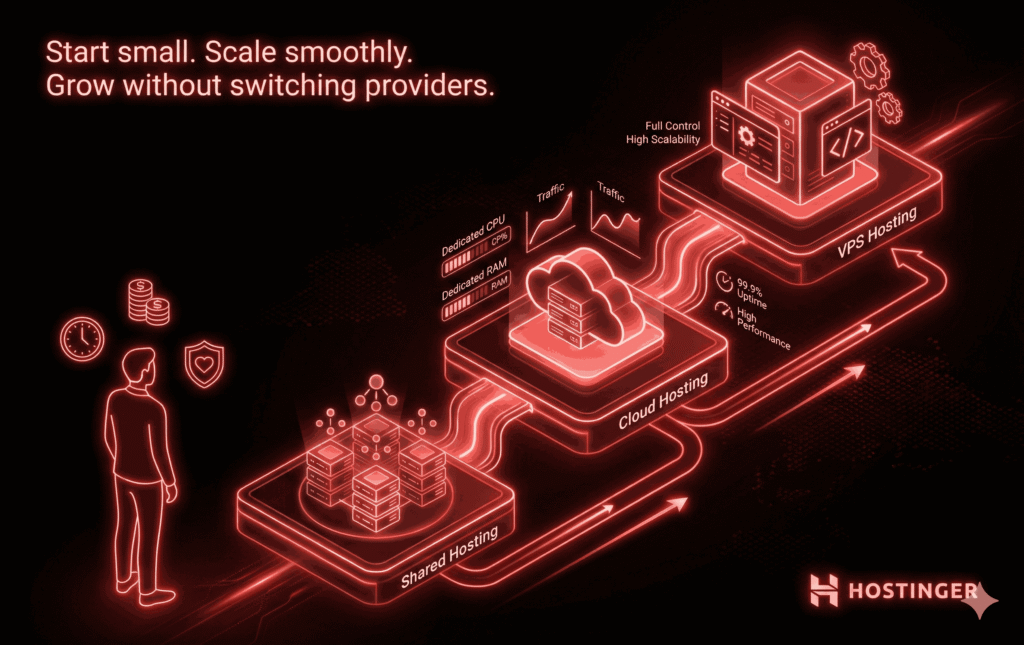
Scalability is where many cheap hosting providers fail. They’re great at getting you started, but fall apart when traffic grows. Hostinger, however, has built its entire ecosystem around the idea that websites evolve.
When your site starts on shared hosting, you’re using pooled resources. That’s fine early on. But once you notice performance dips or traffic increases, Hostinger allows seamless upgrades to Cloud Hosting without changing hosts, domains, or configurations. This is huge. No migrations. No downtime. No panic.
Cloud hosting gives you:
Dedicated CPU and RAM.
Better traffic handling.
Improved uptime.
More consistent performance.
For sites that grow even further, VPS hosting becomes an option. While VPS requires technical knowledge, it provides total control and near-unlimited scalability. You’re no longer sharing resources—you’re managing your own virtual server.
The key takeaway is this: Hostinger doesn’t force you to jump ship as you grow. You scale vertically within the same ecosystem. That continuity saves time, money, and stress—three things every growing website desperately needs.
SEO Capabilities on Hostinger
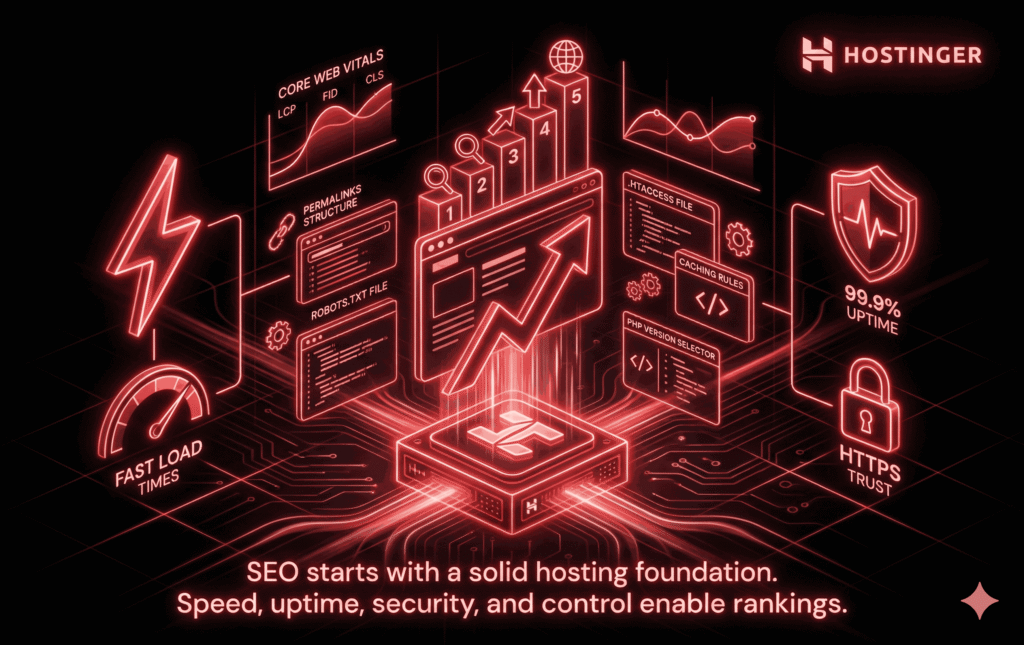
SEO growth depends on more than keywords and backlinks. Hosting plays a foundational role, and Hostinger checks most of the important SEO boxes.
First, site speed, which we already covered, is a direct ranking factor. Faster sites rank better, plain and simple. Hostinger’s infrastructure supports fast load times when configured properly.
Second, uptime reliability. Hostinger guarantees 99.9% uptime, which means your site is almost always accessible to both users and search engine crawlers. Frequent downtime can destroy SEO momentum, especially for growing sites.
Third, free SSL certificates come standard. HTTPS is no longer optional—it’s a trust and ranking factor. Hostinger makes SSL activation a one-click process.
Fourth, Hostinger allows full control over:
Permalinks.
Robots.txt
.htaccess
Caching rules.
PHP versions.
This level of control ensures your technical SEO can grow alongside your content strategy. Whether you’re optimizing Core Web Vitals or implementing schema markup, Hostinger doesn’t get in your way.
Security Features That Support Growth

Growth attracts attention—not all of it good. As traffic increases, so does the risk of attacks, spam, and malware. A hacked site can undo years of growth overnight.
Hostinger includes several security features that protect growing websites:
Free SSL certificates.
DDoS protection.
Firewall protection.
Automated backups (daily or weekly, depending on plan).
Backups alone are a lifesaver. When something breaks—and it eventually will—you can restore your site in minutes instead of starting over. That peace of mind allows you to experiment, update, and grow without fear.
For e-commerce and monetized sites, Hostinger’s security infrastructure is strong enough to handle payment data safely when combined with proper plugins and best practices.
WordPress Growth on Hostinger
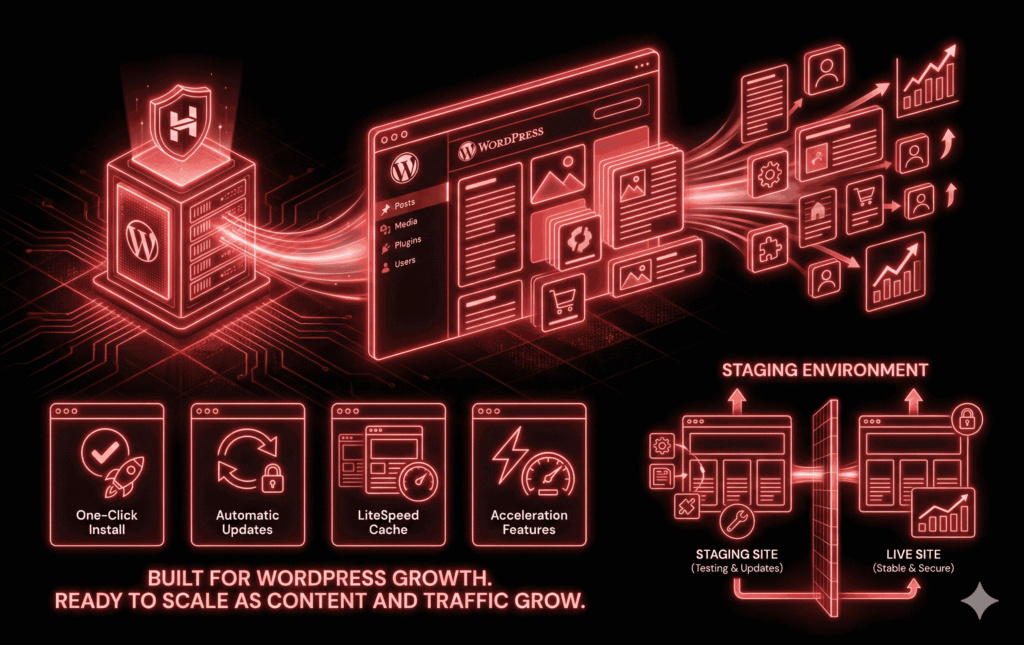
WordPress powers over 40% of the internet, and Hostinger is clearly optimized for it. If your growth strategy involves blogging, content marketing, or WooCommerce, this matters a lot.
Hostinger’s managed WordPress hosting includes:
One-click WordPress installation.
Automatic updates.
LiteSpeed Cache.
WordPress acceleration features.
Staging environments on higher plans.
Staging environments are especially useful for growing sites. You can test updates, plugins, and design changes without breaking your live site. That’s something many budget hosts don’t offer.
As your WordPress site grows with more posts, images, plugins, and users, Hostinger’s infrastructure can handle the load—as long as you upgrade plans responsibly.
E-commerce Growth on Hostinger
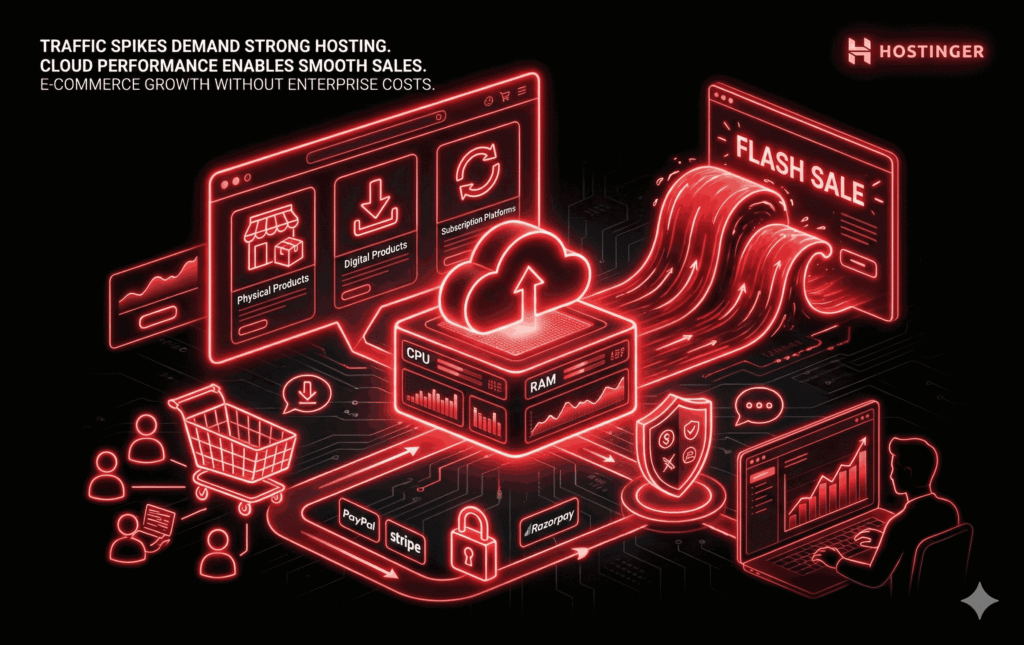
Running an online store is a whole different level of growth pressure. Traffic spikes during sales, payment processing, and customer trust all depend on reliable hosting.
Hostinger supports WooCommerce exceptionally well. With proper optimization, you can run:
Small to medium-sized ecommerce stores.
Digital product shops.
Subscription-based platforms.
Cloud hosting is the recommended option for serious ecommerce growth. It provides the stability and performance needed to handle multiple users browsing and checking out simultaneously.
Payment gateways like PayPal, Stripe, and Razorpay integrate smoothly. Combined with SSL, backups, and caching, Hostinger becomes a solid foundation for e-commerce growth without enterprise-level costs.
Hostinger Pricing: Affordable or Limiting?
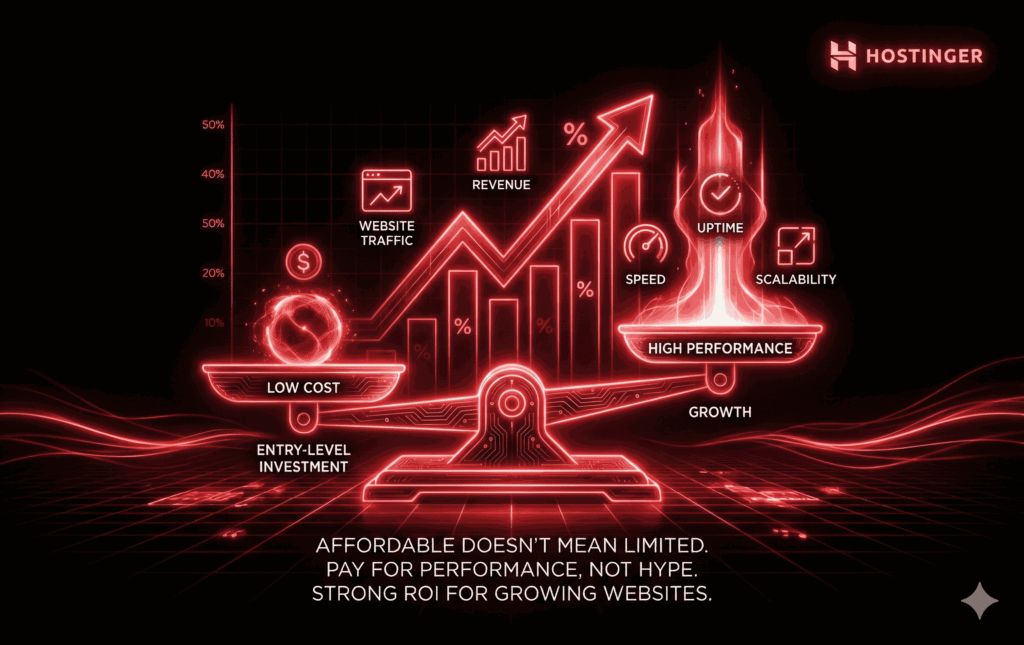
One of Hostinger’s biggest strengths is its pricing—but pricing can also scare people into thinking it’s “too cheap to grow.” That assumption doesn’t hold up in practice.
Entry-level plans are affordable enough for beginners, while higher-tier plans offer real performance improvements. Yes, renewal prices are higher than introductory offers, but they’re still competitive compared to similar providers.
The key is value. You’re not paying for flashy marketing—you’re paying for speed, uptime, and scalability. For most growing websites, Hostinger delivers excellent ROI.
Customer Support and Its Role in Scaling
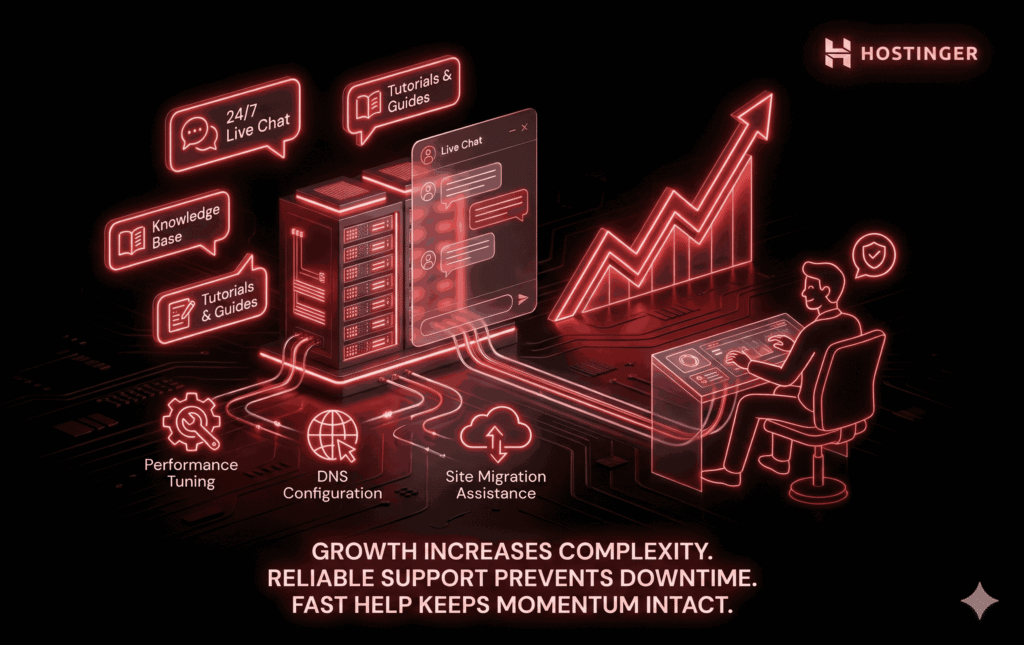
When your site is small, support isn’t a big deal. When it’s growing and generating income, support becomes critical.
Hostinger offers:
24/7 live chat support.
Extensive knowledge base.
Tutorials and guides.
While there’s no phone support, live chat responses are generally fast and helpful. For most growth-related issues—performance tweaks, DNS settings, migrations—support gets the job done.
Real-Life Scenarios: Who Can Grow on Hostinger?
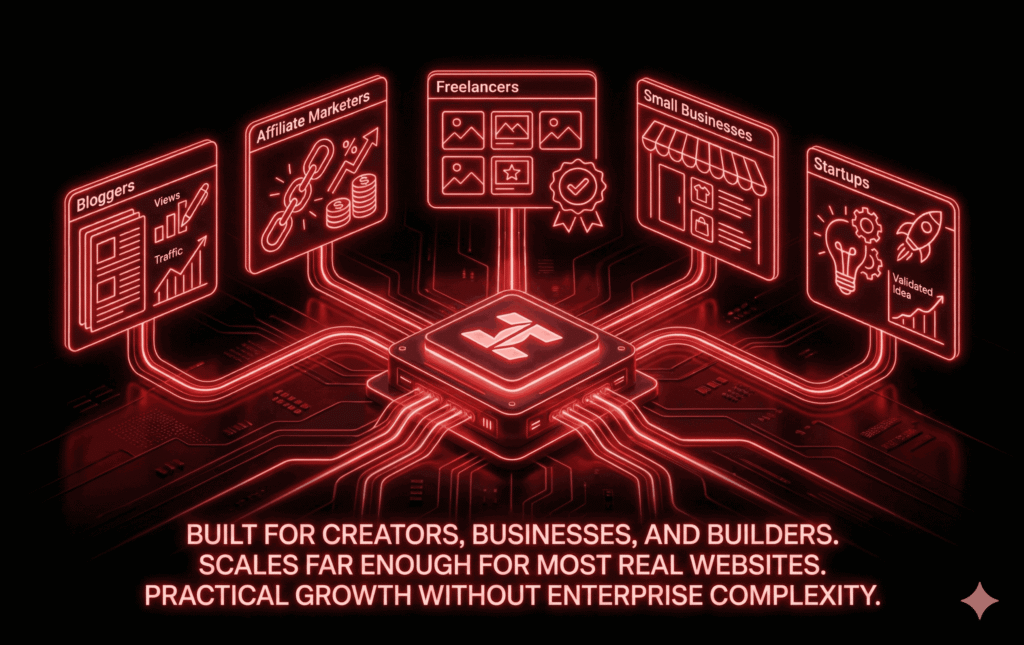
Hostinger is ideal for:
Bloggers scaling content sites.
Affiliate marketers.
Freelancers building authority.
Small businesses expanding online.
Startups are testing and validating ideas.
It’s not designed for massive enterprise platforms, but that’s not its goal. For 90% of websites, Hostinger provides more than enough room to grow.
Hostinger Limitations You Should Know

No hosting provider is perfect. Hostinger has limitations:
Shared hosting has resource limits.
VPS requires technical skills.
Not ideal for enterprise-level custom stacks.
But these aren’t deal-breakers—they’re boundaries. And for most users, those boundaries are far beyond where they’ll ever reach.
Hostinger vs Competitors for Growth
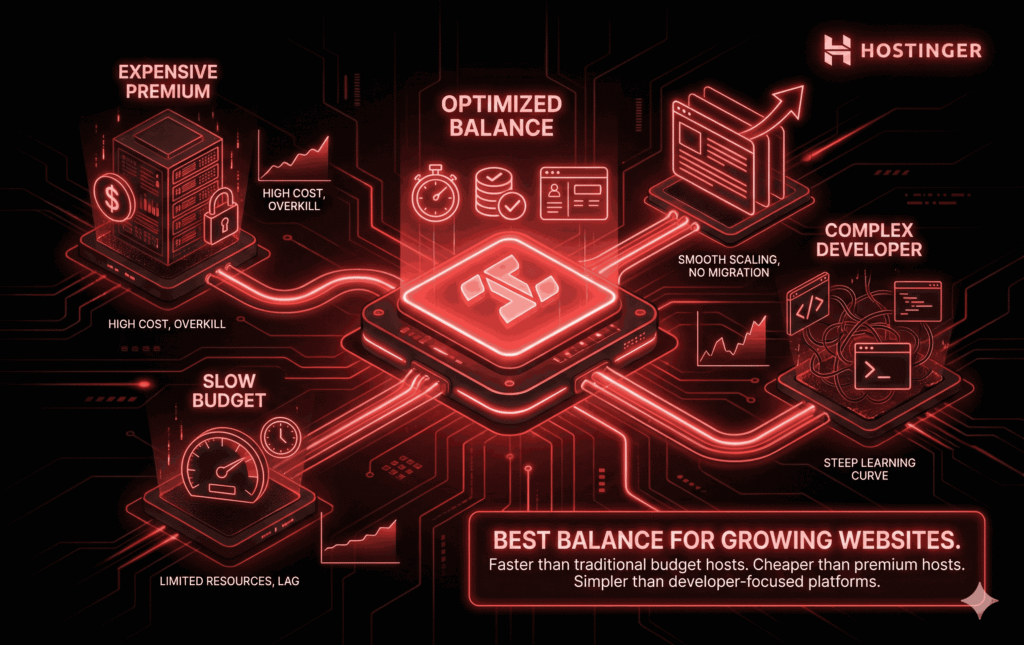
Compared to Bluehost, Hostinger is faster and more affordable. Compared to SiteGround, it’s cheaper with similar performance. Compared to Cloudways, it’s simpler and more beginner-friendly.
Hostinger balances ease, performance, and cost better than most competitors in its class.
Final Verdict: Can You Really Grow a Website on Hostinger?
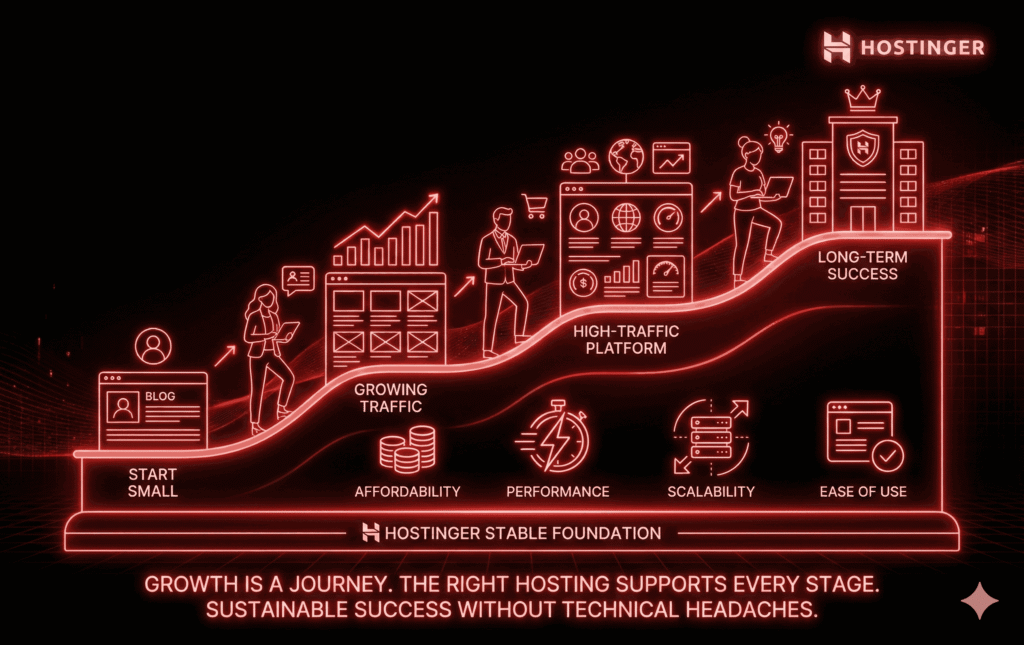
Yes—absolutely.
Hostinger is not just a starting point. It’s a growth platform. From your first blog post to thousands of visitors per day, Hostinger can support your journey as long as you upgrade responsibly and optimize wisely.
Growing a website isn’t about choosing the most expensive hosting—it’s about choosing the right hosting for your stage. Hostinger offers a rare combination of affordability, performance, scalability, and ease of use.
For bloggers, businesses, and creators who want to grow without technical headaches, Hostinger is more than capable of supporting real, sustainable growth.
Frequently Asked Questions ( FAQs )
Can Hostinger handle high traffic?
Yes, especially on cloud and VPS plans.
Is Hostinger good for SEO?
Yes, thanks to speed, uptime, and SSL support.
Can I upgrade my hosting as my site grows?
Absolutely. Hostinger makes scaling seamless.
Is Hostinger safe for e-commerce websites?
Yes, with SSL, backups, and DDoS protection.
Should beginners choose Hostinger?
Yes. It’s one of the best platforms for starting and growing a site.